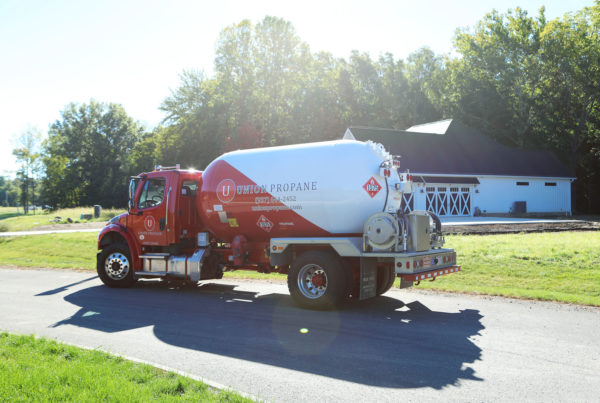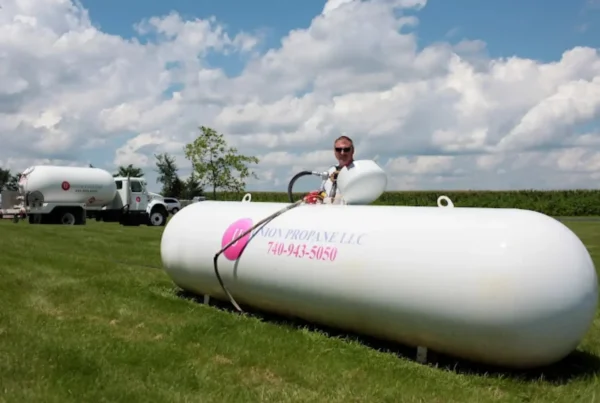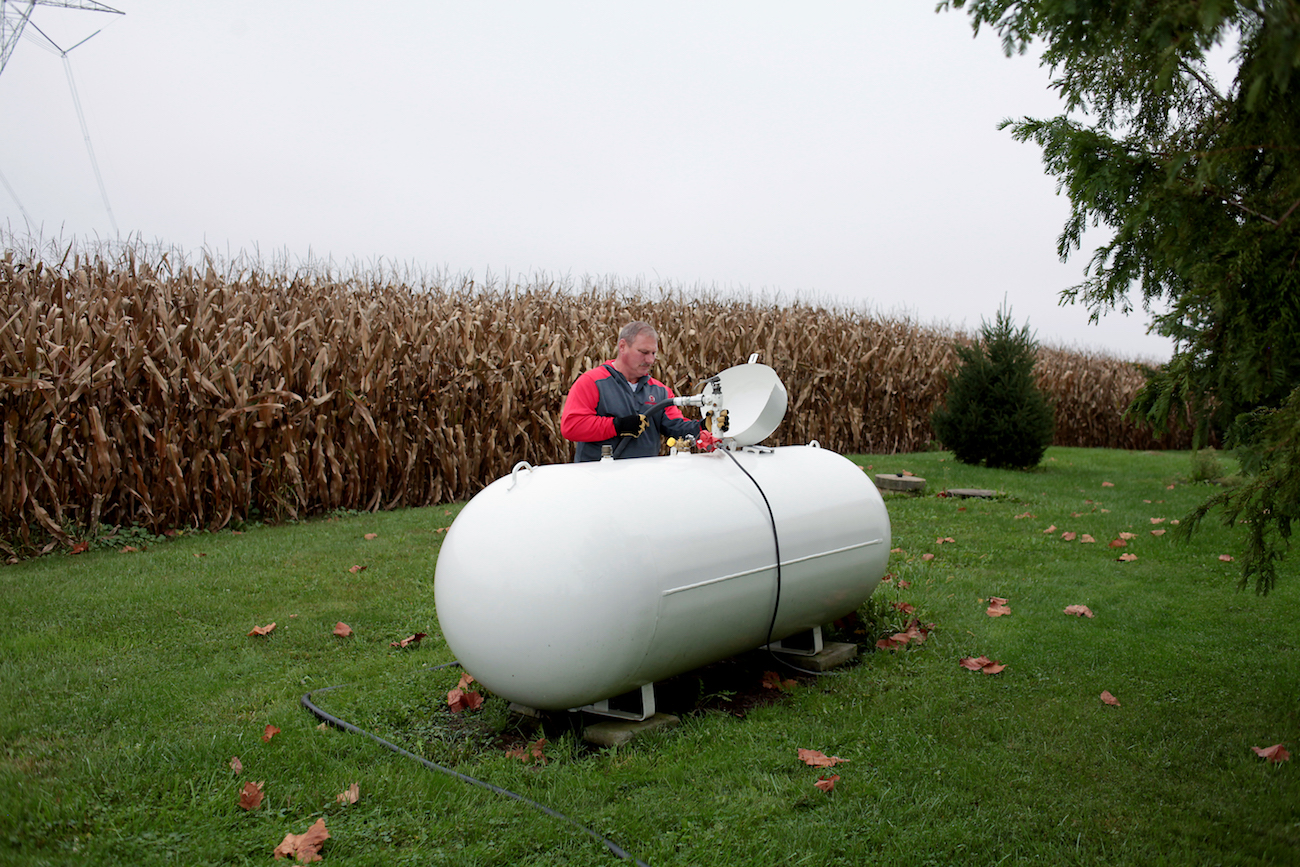

Last January, a woman in Plain City woke up at 5 a.m. to a house that had dropped below 48°F overnight. Her propane tank had hit zero sometime around midnight. Her kids were still asleep. She called us at 6:07 a.m. A Union Propane driver was at her door before 8.
That’s the short version of how emergency propane delivery works when you use a local Ohio provider. But if you’ve never been through it before or if you’re dealing with it right now, here’s everything you need to know, from what to do the moment panic hits to what happens when the truck pulls up.
What Counts as a Propane Emergency in Ohio?
Not every low tank is an emergency, but there are situations where you should not wait for a scheduled delivery:
- Your home heating system has shut off completely
- Outside temperatures are below 30°F and dropping
- You have young children, elderly family members, or anyone with a medical condition in the house
- Your tank reads 5% or below, and you’re heading into a cold night or weekend
- Your water heater, which runs on propane, has gone out mid-winter
In Ohio, propane emergencies spike between November and March, especially during the cold-snap stretch that hits Union County, Madison County, and Delaware County hard. If you’re in that window and your tank is empty or nearly empty, treat it as an urgent matter.
Step 1: Turn Off All Propane Appliances Immediately
Before you do anything else, go through your home and shut off every appliance connected to your propane system. This means your furnace, water heater, stove, dryer, and any other gas-run equipment.
Why this matters: When a tank runs empty, air and moisture can enter the supply line. If appliances are left open or running, that air moves deeper into the system. When the tank is refilled and pressure is restored, you can end up with ignition problems or worse, an unsafe condition that your technician has to correct on-site before the system runs again.
Turning everything off before the delivery takes five minutes and saves you an extra service call.

Step 2: Confirm Your Tank Is Actually Empty
Check the gauge on your propane tank before calling. The gauge is typically mounted on top of the tank; it looks like a small circular dial with percentage markings from 0 to 100.
A reading below 5% means you’re at functionally empty. Propane gauges aren’t always perfectly precise, so “5%” effectively means the system can’t draw consistent pressure.
If your gauge still shows 10–15% but your appliances aren’t running, the problem may not be the fuel level. It could be a regulator issue, a tripped pilot light, or a line freeze, which can happen in Ohio winters when tanks are exposed to extreme cold. That’s still a service call, but a different one.

Step 3: Call a Local Ohio Propane Provider Directly
This is where most homeowners make a critical mistake. When your heat is out, and you’re panicking, it’s tempting to search for the first number that shows up and call a national chain.
Here’s the practical problem with that: large propane companies route calls through regional dispatch centers. Your request goes into a queue with hundreds of others across multiple states. By the time your address makes it onto a driver’s route, you’ve waited 24 to 48 hours, sometimes longer during a cold snap.
A local Ohio propane company routes deliveries based on its own service area. When you call Union Propane from Marysville, Plain City, or Raymond, you’re talking to someone who knows exactly where you are and how long it takes to get there.

When you call, tell them:
- Your full address and county
- Your approximate tank reading
- Whether your heat is completely out
- Whether you have vulnerable people in the home (this affects priority)
- Whether you own or lease the tank (some companies won’t fill a competitor’s leased tank without authorization; clarify this upfront)
Union Propane Marysville, Ohio
Step 4: Know What Happens When the Tank Runs Completely Dry
If your propane gauge hits zero, not 5%, but actually zero, the delivery process involves one extra step that many people aren’t aware of.
When a tank fully empties, the system loses pressure entirely. After the tank is refilled, your propane provider is required to perform a pressure test (also called a leak check or system integrity test) before they can restore service. This is an Ohio state safety requirement, not a sales add-on.

The test typically takes 20 to 45 minutes. The technician pressurizes the line, checks all connections and shutoffs, and confirms there are no leaks before relighting pilots and restoring gas flow to your appliances.
If you’re expecting a quick fill-and-go situation, budget time for this. It’s the reason a cold-tank emergency call takes a bit longer than a regular scheduled delivery.
Step 5: Stay Warm While You Wait
If your home has already gotten cold while you’re waiting on delivery, here’s what to do:
- Move to the smallest interior room and close the door. Smaller spaces retain body heat much better
- Use electric space heaters if you have them (keep them away from curtains and furniture)
- Layer blankets; this is especially important for young children and older adults
- If temperatures drop dangerously inside, don’t wait; call 911 or go to a neighbor’s home, a church, or a public warming center.
The Ohio Department of Development runs a Home Energy Assistance Program (HEAP) for households that qualify for emergency heating help. If cost is a concern during a propane emergency, that’s worth a call too.
How Long Does Urgent Propane Delivery Take in Ohio?
Honest answer: it depends on three things: the time of year, your location, and who you call.
During non-peak months (April through September), Same-day delivery is generally straightforward. Call before noon, and most local Ohio providers can reach you the same afternoon.
During winter peak demand (November through March), High call volume and weather conditions slow everything down. Same-day is still possible, but not guaranteed. Realistic expectation is same-day to next-day, with priority given to homes where heat is completely out.
During active winter storms: This is the most challenging window for emergency delivery. Roads may be impassable, and driver availability gets stretched thin across the region. Getting on the phone early before the storm hits is genuinely critical. The customers who call at 7 a.m. on the first cold day get on the route. The ones who wait until 4 p.m. often end up on the next morning’s schedule.
Why Ohio Rural Homeowners Are More Vulnerable to Propane Emergencies
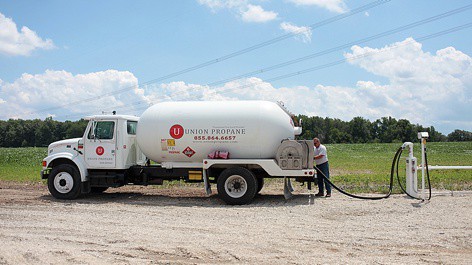
If you live outside Columbus or Marysville’s city limits in rural Union County, Madison County, or Clark County, your home almost certainly runs on propane because natural gas lines don’t reach you. That’s a large portion of Central Ohio.
This also means there’s no backup option. You can’t switch to natural gas if your propane runs out. Your heating system, your hot water, and your cooking all stop together. That’s the core reason why propane emergencies feel more urgent in rural Ohio than they might elsewhere: there’s no substitute fuel available from the street.
If you live in this situation (and a lot of our customers do), the single most effective thing you can do is set a refill reminder when your tank hits 25%. That buffer gives you time to schedule a delivery before it becomes an emergency.
The Pressure Test Explained: Why Your Provider Doesn’t Skip It
We’ve mentioned the pressure test a couple of times. It’s worth explaining in plain terms because customers sometimes push back on it, thinking it’s unnecessary.
When a propane tank empties completely, there’s no pressure in the line. Air enters the system. In some cases, moisture enters too. When the technician refills the tank, pressure returns, but it’s now pushing through a system that may have developed condensation, a loose connection, or a minor leak that was previously masked by the outgoing gas flow.
The leak check catches these issues before you’re using appliances again. It’s not optional under Ohio code, and it’s not something Union Propane created; it’s a standard the industry follows to prevent post-delivery incidents.
If a company offers to skip it to save time, that’s a red flag, not a convenience.
How to Avoid the Next Propane Emergency
Emergency calls are more expensive and less predictable than scheduled deliveries. Most of them are preventable with one habit change.
The 25% rule: Schedule a fill whenever your gauge drops to 25%, not when it hits the red zone. At 25% on a 500-gallon tank, you have roughly 125 gallons remaining, typically several weeks of buffer in normal winter conditions. That window gives you enough time to schedule a regular delivery without any urgency surcharge or priority routing.
Auto-fill enrollment: If you’d rather not track your gauge at all, Union Propane offers an auto-fill program. We monitor your usage patterns and schedule deliveries before your tank needs attention. You stop thinking about propane entirely. This is the most popular option for rural Ohio homeowners who use propane as their primary heat source.
Tank monitoring: For customers who want visibility without auto-fill, our tank monitoring service tracks your fuel level in real time and alerts you when it’s time to order. You stay in control of the scheduling while eliminating the risk of overlooking a low gauge during a busy week.
FAQs: Emergency Delivery in Ohio
1. What’s the fastest way to get propane delivered in Ohio?
Call a local provider directly and specify that your heat is out. Local companies like Union Propane route drivers based on their own service area, which means significantly faster response than national chains dispatching from out of the region. Marysville, Plain City, Dublin, Richwood, and surrounding Union County communities fall within our primary routes.
2. What should I do first when I run out of propane?
Shut off all propane appliances, confirm the tank gauge reads zero, then call for service. Don’t attempt to manually re-light pilots or adjust regulators before the technician arrives and completes the pressure test.
3. Is there an extra charge for urgent propane service in Ohio?
This varies by provider. Some companies charge an emergency or after-hours fee for priority delivery. Always ask upfront. At Union Propane, we’re transparent about pricing before we schedule.
4. Can any propane company fill my tank?
Generally, yes, if you own your tank. If you’re leasing your tank from another company, there may be restrictions. Let your provider know who owns the tank when you call, which avoids confusion on delivery day.
5. What is the pressure test, and do I need one?
Yes, if your tank ran empty. Ohio safety standards require a system integrity check after a full tank runout before service is restored. It typically takes 30 to 45 minutes on-site.
6. Does Union Propane deliver propane in bad weather?
We make every effort to serve emergency calls even during difficult conditions, but driver safety is the ceiling. For non-emergency situations, severe weather may cause schedule delays. Emergency calls with heat-out conditions receive priority when roads are passable.
About Union Propane
Union Propane is a family-owned propane company based in Marysville, Ohio. We’ve been delivering propane across Central Ohio since 2008, serving homeowners, farms, and businesses throughout Union County, Delaware County, Madison County, Clark County, and surrounding communities.
We handle emergency propane calls, scheduled residential delivery, auto-fill programs, tank monitoring, tank installation, and generator hookups. Our drivers know the roads in this part of Ohio because they live and work here.
If your tank is empty or you’re approaching an urgent situation, call us directly. We’ll tell you honestly what we can do and when.