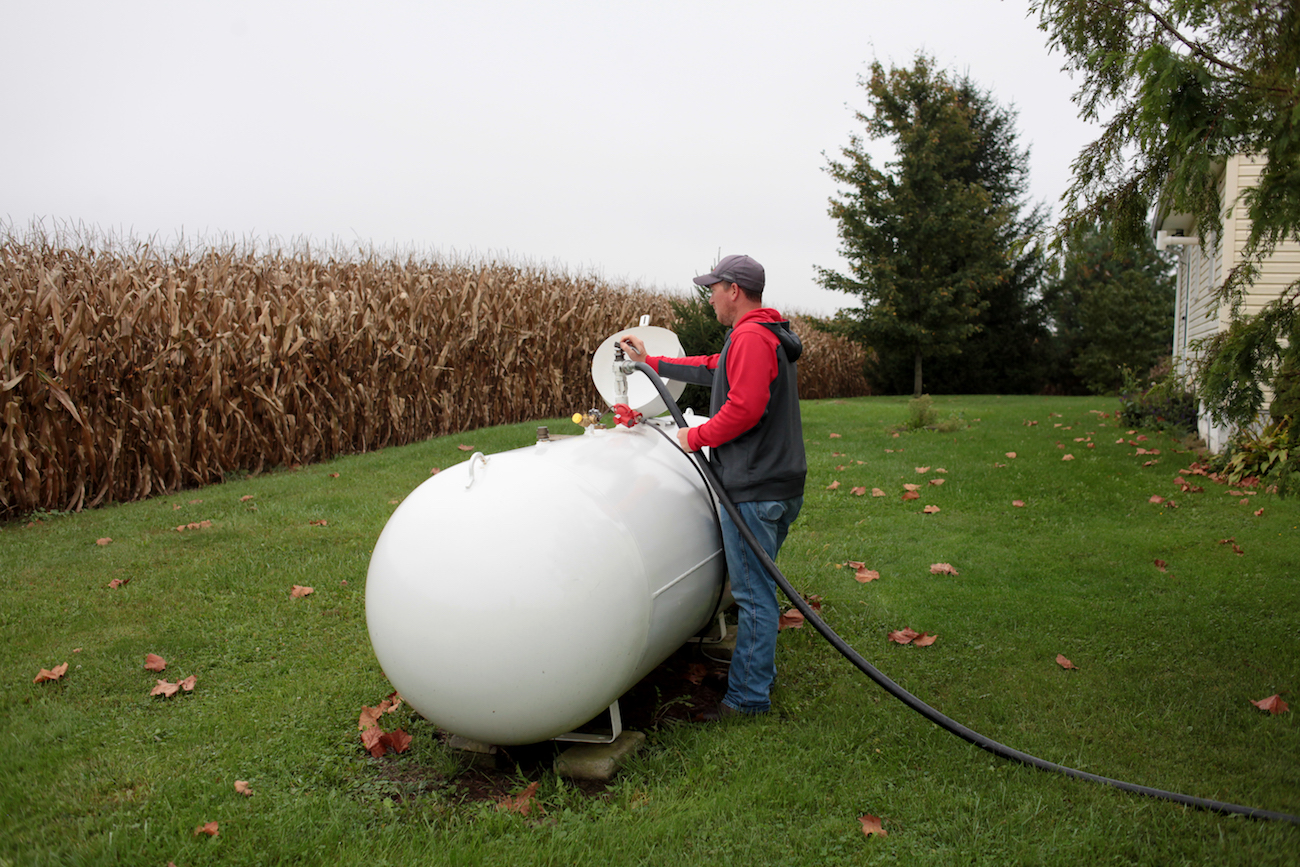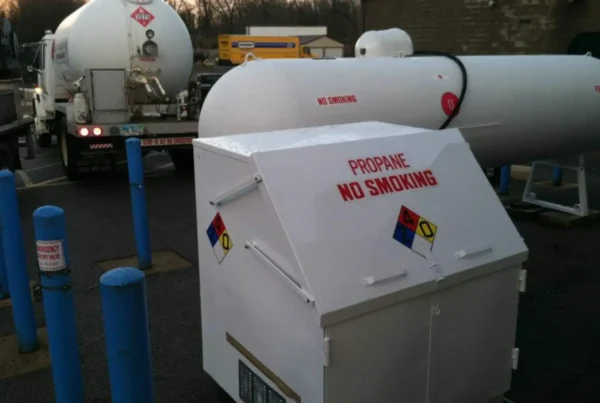

A propane tank empties faster than expected for seven main reasons: extreme cold weather, hidden leaks, poor home insulation, a faulty pressure regulator, a tank that is too small for your home, heavy appliance usage, and a misread gauge. Most of these problems are fixable once you identify the right cause. There is nothing more unsettling than watching your propane gauge drop faster than it should, especially when a cold Ohio winter is settling in, and you depend on that fuel to heat your home. The good news is that a fast-draining tank almost always has a clear cause, and in most cases, a straightforward solution.
This guide walks through every real reason your tank may be draining too quickly, how to spot each problem, and what to do about it. If you want a professional to take a look, Union Propane’s team in Marysville is available.
7 Real Reasons Your Propane Tank Is Draining Fast

1. Cold Weather Is Pushing Your Furnace Into Overdrive
This is the single most common cause, and it catches people off guard every winter. When outdoor temperatures drop sharply, your furnace has to run far longer to maintain indoor heat. At the same time, cold weather reduces the pressure inside your propane tank, which affects how efficiently the gas converts from liquid to vapor.
During a serious cold snap in central Ohio, it is not unusual to see a tank drop from 40% to under 20% in less than a week without any leak or malfunction. Your system is simply working as intended under unusual demand.
What to do: Lower your thermostat by two or three degrees. It makes a genuine difference in consumption. If you want to track usage automatically so cold spells never catch you off guard, learn how Union Propane’s tank monitoring service works.
2 There Is a Hidden Leak Somewhere in the System
A propane leak does not always announce itself with a dramatic smell. Small leaks from fittings, valves, or connections can drain your tank slowly over days or weeks, and because the loss is gradual, it can easily be mistaken for normal usage.
Signs that a leak may be involved:
- A sulfur or rotten egg smell near the tank or appliances
- A faint hissing sound around connections
- Usage that spikes suddenly with no change in your routine
- Dead or discolored vegetation near an underground line
Safety first: If you suspect a leak, turn off the gas supply at the tank valve immediately, leave the area, and call a professional. Do not attempt to locate or repair a gas leak yourself.
Union Propane’s team can inspect your entire system for leaks. Contact us here to arrange an inspection.
3. Poor Home Insulation Is Forcing Constant Heating
If your home has poor insulation, your furnace never truly “wins.” Heat escapes through walls, attics, windows, and doors almost as fast as the furnace produces it. The result is a system that runs nearly continuously nd a propane tank that empties far faster than it should.
Older homes in Marysville and the surrounding areas are particularly prone to this issue. Drafty windows, uninsulated attics, and gaps around doors can add up to significant heat loss that your propane system constantly compensates for.
Quick checks you can do today:
- Hold your hand near the window frames and door edges on a cold day. Any draft indicates a sealing problem
- Check your attic insulation depth. In Ohio, the recommended depth is R-49 to R-60
- Look for visible gaps around pipes, outlets, or where walls meet the floor
Sealing and insulating properly can reduce your propane consumption by 20 to 30 percent meaningful savings over an Ohio winter.
4. Your Pressure Regulator May Be Faulty
The pressure regulator controls how much gas flows from your tank to your appliances. When it malfunctions, it may allow too much gas through at once, causing inefficient combustion and dramatically higher consumption without any obvious warning sign other than a faster-draining tank.
A regulator issue is worth investigating if your usage has increased, but the weather has not changed, and your appliance habits are the same. Replacing a regulator is a relatively minor repair that a qualified technician can handle quickly, and it often pays for itself in reduced fuel use within a single heating season.
If you think your regulator may be causing problems, reach out to Union Propane for a system check.
5. Your Tank Is Too Small for Your Home’s Actual Demand
Sometimes the problem is not a malfunction at all; it is a mismatch between tank capacity and real-world demand. A tank that was adequate when you first moved in may no longer be sufficient if you have added appliances, expanded your living space, or simply had a series of unusually cold winters.
In Ohio, a 250-gallon tank may not provide adequate coverage through a full winter for a larger home. This is not a failure of the tank; it is a sizing issue that is easily corrected by upgrading to a 500-gallon tank or adjusting your delivery schedule.
If you are refilling more than twice per winter, it is worth having a conversation about whether your current tank size fits your actual usage. Explore Union Propane’s delivery and tank options here.
6. Multiple High-Usage Appliances Are Running Simultaneously
Propane usage adds up quickly when several appliances are running at the same time. Your furnace is the biggest consumer by far, but a propane water heater, stove, fireplace, or generator each draws meaningfully from your tank. When they run together as they often do on cold days when you are home, the combined demand can surprise you.
Common propane appliances ranked by typical usage:
- Furnace the largest consumer, especially in winter
- The water heater runs throughout the day with every hot water use
- Propane fireplace often underestimated as a secondary heat source
- Stove and oven moderate usage, but add up with daily cooking
- A standby generator can consume a large amount during extended outages
Being intentional about when and how you use secondary appliances, particularly the fireplace and generator, can meaningfully extend how long your tank lasts between refills.
7. Your Gauge Reading May Simply Be Inaccurate
This one saves a lot of unnecessary panic. Propane gauges are mechanical instruments that can become inaccurate over time, and cold temperatures affect internal pressure in ways that can make a gauge read lower than the actual level. Many homeowners call for an emergency delivery when they still have a meaningful supply remaining.
A reading of 20% is not necessarily cause for immediate alarm, but it is the right time to schedule your next delivery to give yourself breathing room. If your gauge seems to swing dramatically or gives readings that do not match your usage patterns, it may need replacement.
How Long Should a Propane Tank Last in Ohio? (Honest Estimates)
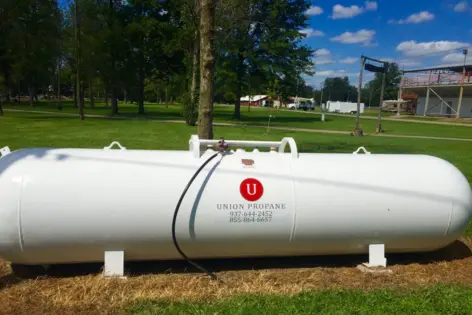
A question Union Propane hears constantly, and rightly so. The honest answer is that it depends heavily on your home size, insulation quality, and how many propane appliances you run, but here are realistic estimates for a typical Ohio home using propane primarily for heat:
| Tank Size | Estimated Winter Duration | Best For |
|---|---|---|
| 100 gallons | 2 to 4 weeks | Small homes, backup heating |
| 250 gallons | 4 to 8 weeks | Medium homes, moderate climate |
| 500 gallons | 2 to 3 months | Larger homes, full heating season |
| 1,000 gallons | Full season or longer | Large homes, multiple appliances |
For a 2,000-square-foot home in Marysville, annual propane consumption typically ranges from 400 to 1,200 gallons, with usage concentrated during the November through March heating season.
Practical Ways to Use Less Propane This Winter
You cannot control Marysville’s weather, but you can control how efficiently your home responds to it. These are the most effective changes homeowners can make:
- Dial back the thermostat by 2–3°F. This small change significantly reduces furnace runtime without meaningfully affecting comfort, especially if you are away during the day.
- Seal air leaks around windows and doors. Weatherstripping and caulk are inexpensive and make a noticeable difference in heat retention.
- Have your furnace serviced before winter begins. A well-maintained furnace burns propane more efficiently. If it has not been serviced in more than a year, schedule a tune-up.
- Add attic insulation if yours is inadequate. Heat rises, and an underinsulated attic can account for a surprising portion of heat loss in older homes.
- Install a tank monitor. Knowing exactly how much propane you have in real time helps you plan deliveries early, avoid emergency fees, and catch unusual usage spikes before they become emergencies.
When Should You Call for a Propane Delivery?
The standard advice is to call when your tank reaches 30%, not 10%, and certainly not when the gauge hits zero. Here is why that window matters:
Waiting until a tank is nearly empty creates a genuine risk of system shutdown. When a propane system runs completely dry, air can enter the lines. Before the system can be safely restarted, a certified technician must purge the lines, a process that takes time and adds cost to what would otherwise be a routine delivery. On a cold January night in Ohio, this is a situation worth avoiding entirely.
Calling at 30% gives you a comfortable buffer, allows you to schedule a standard delivery rather than an emergency one, and ensures your system never goes fully offline.
If you prefer not to think about this at all, Union Propane’s automatic delivery program monitors your usage patterns and schedules deliveries before you run low. It is the simplest way to make sure you never run out.
What Ohio Homeowners Say
“My tank hit empty during a winter storm, and I panicked. Union Propane delivered within hours and set me up with auto-fill so it never happens again. I had no idea that service even existed.”
Homeowner in Marysville, OH
Frequently Asked Questions
Q.1 Why is my propane tank running out so fast in winter?
Cold weather is the most common cause. Your furnace runs much longer to maintain indoor temperatures, and lower ambient temperatures reduce tank pressure, which affects vaporization efficiency. Ohio winters regularly push usage to two or three times the summer rate. If cold weather alone does not explain the drop, check for leaks or a faulty regulator.
Q.2 How long should 250 gallons of propane last in a home?
For a typical Ohio home that uses propane primarily for heat, a 250-gallon tank generally lasts four to eight weeks in winter, depending on home size, insulation quality, and how cold the weather has been. During mild stretches, it can last longer; during severe cold snaps, it may drain faster.
Q.3 How do I know if my propane tank leaks?
Common signs include a sulfur or rotten egg odor near the tank or appliances, a hissing sound around valves or fittings, and unexplained usage increases that are not related to weather or behavior changes. If you notice any of these, shut off the supply at the tank valve, leave the area, and call a professional immediately. Do not attempt to locate or fix a gas leak yourself.
Q.4 How many years can you refill a propane tank before it needs to be recertified?
Most propane tanks last 10 to 12 years before recertification is required. The manufacture date is stamped on the collar of the tank. If your tank is approaching that age, ask your propane supplier about the recertification process during your next delivery.
Q.5 Is it safe to let my propane tank run empty?
It is not recommended. When a tank runs completely dry, air and moisture can enter the lines, which creates a risk of corrosion and requires a professional pressure test and line purge before the system can be restarted. Scheduling your delivery at 30% avoids this entirely and saves you the cost of an emergency service call.
Q.6 How do I bleed air from a propane line?
Line bleeding should always be performed by a certified technician. It typically takes 15 to 30 minutes, depending on system size. Attempting to purge a gas line without proper equipment or training is a safety risk and is not recommended as a DIY task.
Final Thoughts
A propane tank that drains faster than expected is always telling you something. Most of the time, it is one of the seven causes outlined above, and the majority of them have practical, affordable solutions that can be implemented quickly.
The most important step is not waiting until the gauge hits zero. Schedule your next delivery at 30%, have your system inspected if usage seems unusually high, and consider a tank monitor if you want real-time visibility without constantly checking the gauge yourself.
If you have questions about your usage, your tank size, or want to arrange a system inspection, the Union Propane team in Marysville is ready to help. Reach us here or call 937-644-2452.