
A 1 lb propane cylinder is one of those tools that earns its place in your gear bag without taking up much room. Whether you are heading to a Central Ohio state park for the weekend, tailgating before a game, or keeping a spare fuel source ready for winter power outages, this compact little canister handles the job without demanding much from you in return.
But before you toss one into your backpack or reach for a refill adapter, there are a few things worth knowing, including what these cylinders are actually designed for, which ones you can legally refill, and when a small portable cylinder simply is not enough for the task at hand.
What Is a 1 lb Propane Cylinder?

A 1 lb propane cylinder, also called a 1 lb propane tank, small propane cylinder, camping propane bottle, or disposable propane canister, is a compact, pressurized metal container that holds approximately 16 ounces of liquid propane. It screws directly into compatible appliances using a standard valve connection, making setup quick and straightforward.
You have likely seen the classic green camping bottles at hardware stores, sporting goods retailers, and outdoor supply shops. They are designed for portability above everything else, which is exactly why they are popular for short outdoor excursions where carrying a 20 lb grill tank is not practical.
That said, small cylinders are built for small, temporary jobs. If you are thinking about running home heating, powering a generator through an extended outage, or cooking multiple meals a day, the right solution is a properly sized residential tank something our local propane experts can help you plan.
Common Uses for a 1 lb Propane Cylinder
Portable Camping Stoves and Backpacking Meals
A small propane cylinder is a natural fit for a portable camping stove. Whether you want a hot breakfast at a campsite, coffee before an early morning fishing trip, or a quick meal at a tailgate, the 1 lb cylinder connects easily and gets the flame going fast.
For car camping, they are nearly effortless. For backpacking, you will want to weigh the tradeoffs a full cylinder adds meaningful weight, and lightweight camping fuel alternatives may suit long-distance hikers better.
Portable Grills and Outdoor Cooking
Tabletop grills and portable cooktops that accept a 1 lb cylinder are popular at picnics, backyard gatherings, and RV trips. Connecting is simple: screw in the cylinder, check the connection, and follow your appliance’s instructions.
A single 1 lb cylinder works well for a short cookout. For frequent patio grilling or all-day outdoor cooking sessions, a larger setup becomes more practical and economical. If your outdoor kitchen is becoming a regular fixture, it may be time to think about upgrading to a larger propane tank with a proper connection.
Small Portable Heaters
Many campers, hunters, and outdoor workers use a 1 lb cylinder with a small heater such as a Mr. Heater Little Buddy-style unit for spot heating in tents, ice-fishing shelters, hunting blinds, workshops, and covered outdoor spaces.
This is the category where careful attention matters most. “Portable” does not mean “safe to use anywhere.” Always follow the heater manufacturer’s ventilation and safety requirements to the letter, and never leave a running propane heater unattended.
A portable heater is a useful short-term tool. It is not a substitute for a reliable home heating system. Ohio winters are too unpredictable to depend on a 1 lb canister through the cold months. If you are using portable propane to cover a heating gap, it is worth having a conversation with a propane installation expert about a more permanent solution.
Lanterns, Torches, and Utility Appliances
Small propane cylinders also power compatible lanterns, hand torches, and a range of outdoor utility appliances. These tend to be brief, focused uses, which is exactly where a 1 lb cylinder makes the most sense.
Can You Refill a 1 lb Propane Cylinder?
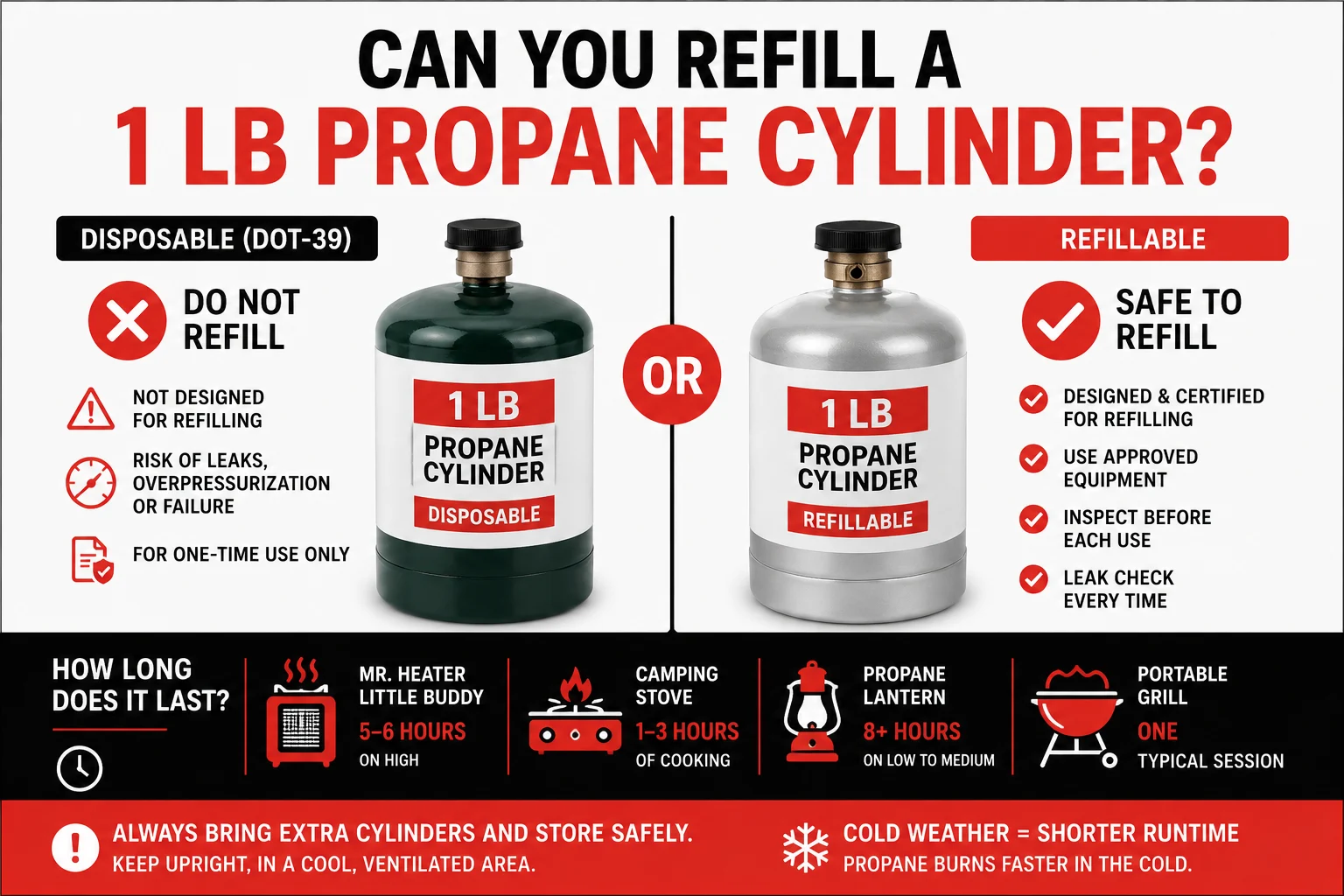
Standard disposable 1-lb propane cylinders, including the familiar green camping bottles made by Coleman and others, are classified as DOT-39 cylinders. They are engineered and certified for one-time use only and are not built to withstand the stress of repeated filling cycles.
The U.S. Department of Transportation’s Pipeline and Hazardous Materials Safety Administration (PHMSA) specifically cautions consumers not to refill DOT-39 cylinders. Attempting to do so can cause leaks, dangerous overpressurization, or structural failure. Using a refill adapter does not change the underlying risk; the cylinder itself must be designed, tested, and certified for repeated refilling before it is safe to do so.
What About Refillable 1 lb Propane Cylinders?
Refillable 1 lb propane cylinders do exist and are a practical option for frequent portable users. Brands like Flame King manufacture DOT-certified refillable versions that are designed to be filled from a larger 20 lb tank using an approved adapter.
Before using a refillable cylinder, confirm:
- The cylinder is clearly marked “refillable” by the manufacturer
- Certification is current, and the cylinder includes manufacturer instructions
- There are no dents, rust, damaged threads, or valve problems
- You are using the correct, approved filling equipment
- You perform a leak check after every connection
If you are not certain whether your cylinder is disposable or refillable, treat it as disposable and do not attempt to fill it. When in doubt, the safer call is a new refillable cylinder or a fresh disposable.
How Long Does a 1 lb Propane Cylinder Last?
Runtime depends on the appliance’s BTU output, the flame setting, outdoor temperature, wind, and how consistently the appliance runs. There is no universal answer, but here are useful general estimates:
| Appliance | Approximate Runtime |
| Mr. Heater Little Buddy (3,800 BTU) | ~5–6 hours on high setting |
| Camping stove (single burner, medium flame) | 1–3 hours of cooking |
| Propane lantern (low to medium output) | 8+ hours |
| Portable grill (short session) | One typical grilling session |
Cold temperatures are worth factoring in. In Ohio winters, propane vapor pressure drops as temperatures fall, which can reduce effective output and make a cylinder feel empty before it technically is. Running your heater on maximum during a cold night will burn through fuel faster than the same heater on a mild autumn evening.
The practical rule: always bring more cylinders than you think you need for an outing. Store extras upright in a cool, ventilated location never in a hot vehicle, an enclosed space, or near any ignition source.
How to Tell When a 1 lb Propane Cylinder Is Full (or Empty)
The most reliable method is a kitchen scale. A typical empty disposable cylinder weighs approximately 0.8 to 1 lb on its own. A full cylinder with propane weighs roughly 1.8 to 2 lbs total. The difference tells you how much fuel remains.
Some users test cylinders by pouring warm (not hot) water down the side and feeling for a temperature change at the propane level. Propane absorbs heat, so the liquid level feels cooler. This method works in a pinch but is less precise than a scale. For certified refillable cylinders, follow the fill level guidance in your manufacturer’s instructions.
Can a 1 lb Cylinder Replace a 20 lb Tank?
For short, portable tasks with the right appliance, yes. For regular or extended use, no.
| Use Case | Best Choice |
| Quick campsite breakfast | 1 lb cylinder |
| Tailgate grill for one session | 1 lb cylinder |
| Weekend camping trip (multiple meals) | Multiple 1 lb cylinders or refillable option |
| Regular patio grilling | 20 lb tank |
| Home heating, water heating, or generator backup | Properly sized residential propane system |
If your needs are growing beyond occasional portable use, it is worth understanding the options for above-ground and underground propane tanks before you commit to a setup. Our team can walk you through above-ground vs. underground propane tank options based on your property and usage.
Safe Handling and Storage for 1 lb Propane Cylinders
Small cylinders carry the same hazards as larger tanks and deserve the same respect. These habits keep you and everyone around you safer:
Before use:
- Confirm the cylinder type matches your appliance requirements
- Inspect the cylinder for rust, dents, damaged threads, or signs of leakage
- Connect outdoors or in a well-ventilated area, away from flames, sparks, and open ignition sources
During use:
- If you smell propane, turn off the appliance immediately if it is safe to do so, step away from any ignition source, and do not use the cylinder until you have identified and resolved the issue
- Never leave a connected, running appliance unattended
Storage:
- Store cylinders upright in a cool, ventilated location out of direct sunlight
- Never store propane cylinders in a vehicle, basement, or enclosed living area
- Keep extra cylinders away from heat sources and out of reach of children
For homeowners managing propane beyond portable appliances, reliable fuel management and delivery scheduling matters. Our Propane Customer Services team is available to answer questions about residential tanks, delivery options, and service.
What to Do With Empty 1 lb Propane Bottles
Even an “empty” cylinder may contain residual propane vapor. Do not throw a cylinder into a fire, crush it in a recycler, or assume it is safe for curbside pickup.
The right disposal path:
- Contact your local household hazardous waste program
- Check with Central Ohio recycling centers that accept pressurized containers
- Ask at campgrounds, which often have dedicated propane disposal points
- Confirm accepted procedures with your local waste management provider before making the trip
Switching to a certified refillable cylinder for regular portable use significantly reduces the number of disposable canisters you need to manage and dispose of over time.
Frequently Asked Questions
Q.1 Are 1 lb propane cylinders safe to use indoors?
Only when the appliance manufacturer specifically approves indoor use and the space meets all ventilation requirements. Never bring an outdoor stove, grill, lantern, or heater into a home, tent, garage, RV, or any enclosed space; carbon monoxide buildup is a serious risk with any combustion fuel.
Q.2 Can I refill a green Coleman 1 lb propane bottle?
No. Standard green disposable bottles are DOT-39 single-use cylinders and should never be refilled. If you want a reusable option, purchase a cylinder that is specifically manufactured and marked for refilling.
Q.3 How do I know whether my cylinder is refillable?
Read the label and the manufacturer’s instructions. Refillable cylinders explicitly state they are refillable and include instructions for safe filling. If the label says “non-refillable” or “do not refill,” it is a disposable.
Q.4 Can I connect a 1 lb propane cylinder to a regular full-size grill?
Only if the grill is designed for it or if you are using a manufacturer-approved adapter. Never improvise fittings or use a damaged or uncertified adapter. A bad connection on a propane system is a fire and explosion risk.
Q.5 Is a 1 lb propane cylinder a good emergency backup?
It can handle short-term cooking, lighting, and compatible portable heating during a power outage. It is not a complete home energy plan. For outages lasting more than a day or two, or for homes with propane appliances, a properly sized residential propane supply is a much more reliable answer. Checking the propane cost per gallon before planning a larger supply helps you budget the right setup for your household.
Q.6 When should I move to a larger propane tank?
When you are regularly running out of 1 lb cylinders, using propane for home appliances, heating, or a generator, or finding that the cost and inconvenience of disposable canisters is adding up. A conversation with a propane installation expert can help you size the right tank for your actual usage.
When Small Is Not Enough
A 1 lb propane cylinder is a genuinely useful piece of gear for the right jobs a campsite meal, a tailgate grill, a lantern on a weekend trip, or spot heat in an ice-fishing shelter. It is not designed to carry the load of a home heating system, a whole-season grilling setup, or a standby generator.
For homeowners across Marysville, Columbus, and the surrounding Central Ohio region, Union Propane has been helping local families and businesses with propane tank installation, delivery, and service for more than 16 years. When your needs grow beyond what a camping bottle can handle, request propane service and speak with our team about what fits your property and your lifestyle.